

What are trade secrets and how can you protect them?

.avif)
- A trade secret needs no registration and lasts indefinitely while the information stays confidential, unlike patents at 20 years from filing and trademarks renewed every 10 years.
- To qualify, information must not be generally known in its sector, must hold commercial value because it is secret, and must be under reasonable steps to keep it confidential.
- The trade-off is that trade secrets give no protection against reverse engineering or independent discovery, and once the information is disclosed the protection is lost with no way to recover it.
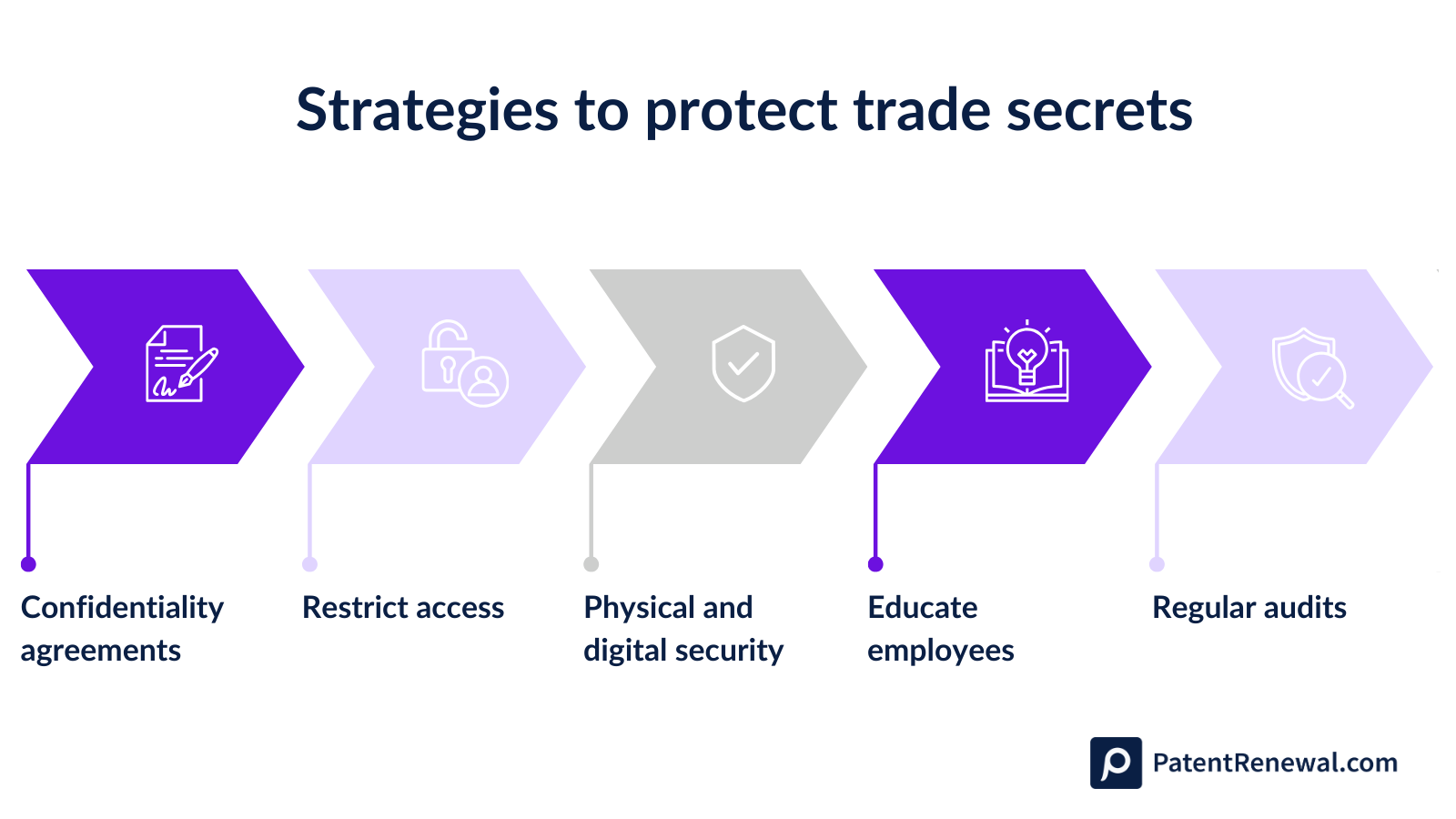
- Practical protection comes from NDAs and confidentiality clauses, restricted access, physical and digital security, employee training, and regular audits.
- Enforcement puts the burden of proof on the holder, who must show the information qualifies and was misappropriated. Remedies include injunctions and monetary damages.
- Standards are set by the TRIPS Agreement internationally, EU Directive 2016/943 across member states, and the US Defend Trade Secrets Act of 2016.
Trade secrets are an essential tool for businesses to protect confidential information that gives them a competitive edge, offering a flexible alternative to patents and trademarks within intellectual property strategies.
In this blog post, we break down their importance, how they compare to other forms of IP like patents and trademarks and how companies can protect them.
Difference from patents and trademarks
Trade secrets protect confidential information that provides a competitive advantage without requiring registration. This makes trade secrets a flexible option for businesses looking to safeguard proprietary information. They play a crucial yet often overlooked role in IP management, offering protection without the need for repeated IP renewal efforts.
However, patents, trademarks, and trade secrets each play a distinct role in protecting intellectual property:
- Patents safeguard new inventions, such as technologies or processes, by granting exclusive rights in exchange for public disclosure. Typically, patents are valid for 20 years from the filing date, contingent upon the payment of scheduled fees. In most countries, they need to be renewed yearly by paying a fee to the local patent office to remain in force.
- Trademarks protect brand elements like names, logos, and slogans that identify and distinguish products or services, requiring registration and periodic renewal. The trademark renewal process typically occurs every 10 years if the owners want to keep them alive and protected.
The key difference is that patents and trademarks require public disclosure and have limited protection periods, while trade secrets remain protected indefinitely as long as they stay confidential.
What can be a trade secret?
Trade secrets can include anything from formulas and manufacturing processes to client lists and marketing strategies or proprietary insights that provide a competitive edge.
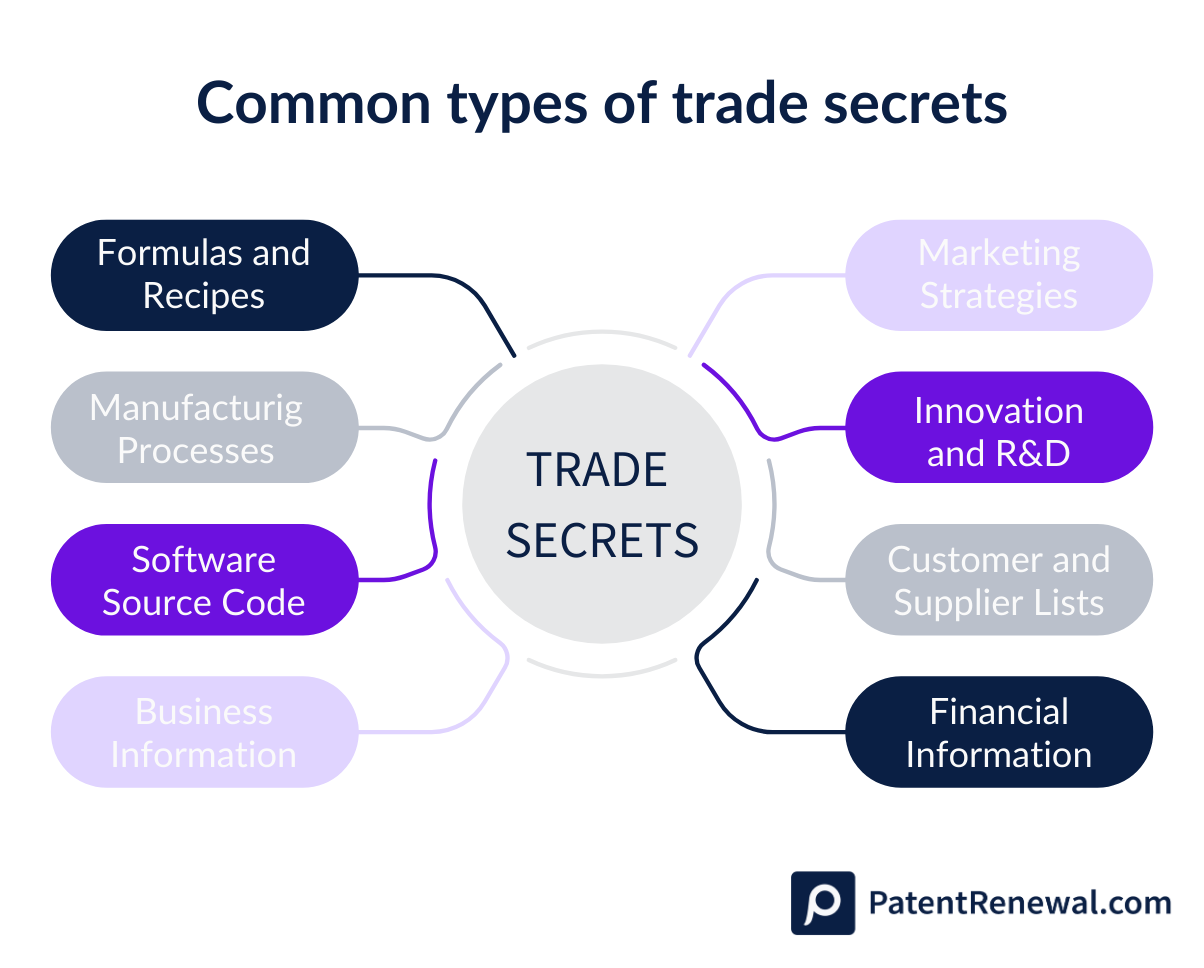
To qualify as a trade secret, the information must:
- Not generally known or readily accessible to individuals within the relevant business sector.
- Hold commercial value due to its secrecy.
- Be subject to reasonable steps by the rightful holder to maintain its confidentiality, such as implementing confidentiality agreements with employees and business partners.
What makes trade secrets unique?
The defining feature of a trade secret is that it provides a competitive advantage and is actively protected by its owner. For instance, the recipe for Coca-Cola is a well-known example of a trade secret, a valuable and carefully guarded asset. Unlike patents, which require public disclosure, trade secrets allow businesses to maintain confidentiality while continuing to benefit from their competitive edge.
Another unique aspect of trade secrets is their indefinite protection, as long as they remain secret. This contrasts with patents and trademarks, which have defined durations and require public registration. Trade secrets also eliminate the time and cost associated with formal registration, making them a practical option for businesses prioritizing secrecy.
The challenges of protecting trade secrets
However, trade secrets come with a trade-off. They lack formal legal protection against reverse engineering or independent discovery, unlike patents and trademarks, which offer enforceable rights but require regular IP renewal and public disclosure.
Additionally, if a trade secret is accidentally disclosed or mismanaged, its protection is immediately lost, with no legal recourse available to recover it. This makes trade secrets inherently riskier to maintain, especially in highly competitive industries where leaks or breaches are more likely.
This means businesses must take proactive measures to safeguard their trade secrets and ensure they remain confidential.
Why do trade secrets matter to businesses?
Trade secrets often represent some of the most valuable assets a business owns, especially in industries where rapid innovation is key. They form an essential pillar of their IP management strategy since these can differentiate a company from its competitors.
For SMEs and startups, trade secrets can be critical to establishing and maintaining a competitive edge. For larger organizations, they often form the foundation of long-term strategies.
The value of trade secrets has grown significantly in recent years, particularly in technology-driven sectors such as artificial intelligence and pharmaceuticals. For example, proprietary algorithms or drug formulations are often protected as trade secrets, ensuring that competitors cannot easily replicate them.
Strategies to protect trade secrets
The effectiveness of trade secrets within a comprehensive IP management plan depends on how well they are protected. These strategies are critical to minimizing the risks of trade secret theft, which can result in significant financial losses and damage to a company’s competitive advantage.
Here are key strategies to safeguard these assets:
1. Use confidentiality agreements
Employ non-disclosure agreements (NDAs) and confidentiality clauses in employee and business partner contracts. These agreements make it clear that the information must be kept private.
2. Restrict access
Limit access to trade secrets to only those employees or partners who need it.
3. Implement physical and digital security
Lock physical documents in secure locations and use encryption to protect digital data. Regularly update security protocols to address potential vulnerabilities.
4. Educate employees
Train employees on the importance of trade secrets and the proper ways to handle sensitive information. Awareness is a critical component of maintaining confidentiality.
5. Regular audits
Periodically review your trade secret protection measures to ensure compliance and effectiveness. Conducting audits helps identify potential risks and areas for improvement.
Trade secrets as part of IP management
Incorporating trade secrets into a broader IP management strategy, alongside regular patent and trademark renewals, allows businesses to maximize the value of their intellectual property. Companies should identify and classify their trade secrets based on their value and sensitivity. This helps prioritize protection efforts and allocate resources effectively.
A layered approach, combining trade secrets with other forms of IP like patents provides robust protection. For example, a company might patent a manufacturing process while keeping the specifics of production logistics as a trade secret. This strategy ensures that critical business information remains protected on multiple fronts.
Trade secret laws and enforcement
Enforcing trade secret rights requires proving that the information meets the criteria of a trade secret and that it has been misappropriated. Legal remedies include injunctions to prevent further misuse and monetary damages to compensate for losses.
However, the burden of proof often lies with the trade secret holder, making proactive protection measures critical.
- Trade secret protection varies globally, but international agreements like the TRIPS Agreement establish minimum standards.
- In the European Union, Directive 2016/943 harmonizes trade secret laws across member states, ensuring consistent protection.
- In the United States, the Defend Trade Secrets Act (DTSA) of 2016 provides a federal framework for addressing trade secret misappropriation.
Manage your IP effectively with PatentRenewal.com
Trade secrets are a vital part of a comprehensive IP management strategy, complementing regular IP renewal efforts. Understanding what they are, why they matter, and how to protect them is essential for businesses aiming to safeguard their competitive advantage and foster innovation.
At PatentRenewal.com, we simplify IP management by automating the renewal of patents, trademarks, utility models & designs. Sign up today to save up to 50% on your annual IP renewal costs while ensuring the security of your valuable intellectual assets.
.png)