FREE TOOL LAUNCHED! CALCULATE RENEWAL FEES FOR YOUR PATENT FAMILY INSTANTLY
Try now

.png)
IP docketing is one of the most important operational systems behind a well-managed IP portfolio.
Most IP teams never notice docketing problems until something goes wrong. A missed annuity payment, an overlooked office action, or an incorrectly calculated national phase deadline can quietly put years of R&D investment at risk. IP docketing exists to prevent those failures.
This guide explains what IP docketing is, why it matters, what a reliable docket should track, and how IP teams can reduce the risk of missed deadlines. It also looks at common docketing mistakes, recovery options, and how docketing connects to patent renewals, trademark renewals, and broader IP renewal management.
IP docketing is the process IP teams use to keep track of every important deadline, action, and document across an intellectual property portfolio. It covers patents, trademarks, designs, copyrights, domain names, and other IP rights.
In simple terms, the docket is the place where each IP matter is recorded, together with its key dates, required actions, documents, status updates, and responsible owners. It shows what needs to happen, when it needs to happen, and who needs to handle it.
Before digital tools became standard, IP teams often tracked these dates in paper calendars, logbooks, or spreadsheets. Today, most IP professionals use dedicated IP docketing software or IP management systems because they are more reliable for deadline calculation, reminders, document storage, audit trails, and portfolio reporting.
Spreadsheets can work for a small, low-risk portfolio, but they should be treated as a temporary setup, not a long-term docketing strategy. However, once a portfolio includes multiple jurisdictions, foreign agents, annuity deadlines, grace periods, and procedural actions, manual tracking quickly becomes risky.
Three things have to work for docketing:
IP docketing matters because the consequences of getting it wrong are usually permanent and disproportionate to the cost of getting it right. A single missed reminder, mistyped date, or delay in processing incoming mail can put years of R&D investment, brand value, or market exclusivity at risk.
What makes IP docketing harder than it looks is the combination of scale, cascading dependencies, and silent failures. A single patent matter can generate dozens of deadlines over its lifecycle. A portfolio of 200 matters can easily span thousands of dates. When one triggers changes, such as an office action response, continuation filing, grant date, or ownership update, downstream deadlines may need to be recalculated.
Some failures also do not announce themselves immediately. An IP renewal provider may believe a case was intentionally abandoned. A patent office may show a different status than your internal records. A foreign agent may have updated information that has not reached your team. Without regular reconciliation, a matter can quietly lapse before anyone notices.
For law firms, missed deadlines are one of the most common drivers of professional liability risk in IP work. For companies, a lapsed patent on a core technology can weaken market protection, a cancelled trademark can create brand risk, and a missed PCT national phase deadline can close off an entire market.
Even when reinstatement is available, fees can range from hundreds to several thousand dollars depending on the jurisdiction and how late the action is. Recovery is never something an IP team should rely on as part of normal operations.
Every IP type has its own rule set. A well-run IP docket tracks different events depending on the asset type. The most common docketed events include:
| IP type | Common docketed events |
|---|---|
| Patents | Filing dates, priority deadlines, PCT national phase deadlines, office action responses, extension deadlines, grant fees, issue fees, maintenance fees, annuities, patent renewals, validation deadlines, post-grant windows, opposition deadlines, PTA and PTE dates, terminal disclaimer impacts, expiry dates, ownership recordals, reinstatement or restoration deadlines |
| Trademarks | Application deadlines, office action responses, publication and opposition periods, evidence of use deadlines, declarations of use, trademark renewals, renewal grace periods, Madrid Protocol deadlines, statement of use deadlines, cancellation or invalidation deadlines, ownership recordals |
| Designs | Design filing dates, registration dates, publication or deferment deadlines, renewal deadlines, Hague Agreement deadlines, grace periods for late renewal, maximum term dates, ownership recordals |
| Other IP assets | Copyright registration dates, domain name renewals, licensing agreement deadlines, royalty payment schedules, audit windows, contract renewal or termination dates, coexistence agreement deadlines, plant variety right deadlines |
IP docketing can happen in-house, through an outsourced docketing provider, or through a hybrid setup. The workflow is similar in each case. The main difference is who owns each step.
In an in-house setup, the internal IP team manages the docket directly. In an outsourced setup, an external provider handles part or all of the docketing work. In a hybrid setup, the internal team usually keeps control of strategic decisions, while external partners support routine tasks such as deadline monitoring, annuity payments, or IP renewals.
Specifics vary by team, but every reliable IP docketing process follows the same core steps.
Each new IP matter gets a unique docket number, including key details such as the
The docketing system, docketing specialist, or IP owner calculates future deadlines using jurisdiction-specific rules. These can include office action response dates, national phase entry deadlines, IP annuity schedules, declaration deadlines, IP renewal windows, validation deadlines, and other procedural milestones. It’s also important to account for weekends, public holidays, grace periods, and changes in office practice.
Every important deadline needs a primary owner and a backup, so critical dates never depend on one person alone. For outsourced or hybrid docketing, this step should also make ownership clear. It can be an internal IP owner, outside counsel, a foreign agent, or an IP renewal provider.
IP teams usually review the docket daily or weekly. You should set reminders internally or receive them from your provider at staggered intervals, such as 90, 60, 30, 14, and 7 days before the deadline.
Then the assigned owner completes the action, for example filing a response, paying a patent renewal fee, instructing a foreign agent, submitting a declaration, or confirming abandonment. After completion, the docket should include proof of the action, in case anyone later needs to verify what happened.
For larger portfolios, this may mean a quarterly review. For smaller portfolios, a review twice a year may be enough. These checks should confirm that deadlines, statuses, documents, ownership details, and IP renewal records still match the official data.
A good docketing process should make everyday IP work feel calmer, not more complicated. Here are the habits that make the biggest difference in practice:
Spreadsheets can feel fine at the beginning. If you only manage a few low-risk matters, a simple tracker may be enough for a while.
But as soon as the portfolio grows, the risks grow with it. You need more than rows and columns. You need automatic reminders, jurisdiction-specific rules, escalation workflows, version history, and a clear audit trail. That is where dedicated docketing software becomes much safer than a manual setup.
A docket should never depend on one person’s memory or availability. People take holidays. They get sick. They leave the company. They also have busy weeks where something can slip. Every critical deadline should have a primary owner and a backup, so the process does not fall apart when one person is unavailable.
For high-risk actions, such as national phase entry, office action responses, validation deadlines, or key renewal decisions, a second pair of eyes can make a real difference. A responsible attorney, IP manager, or portfolio owner should review the deadline together with a docketing specialist or another qualified reviewer.
It may feel like an extra step, but it is much easier to catch an error before a deadline passes than to fix it afterward.
Incoming mail often starts the clock. An office action, filing receipt, agent email, or patent office notice may trigger a new deadline as soon as it arrives. If that document sits in an inbox for a few days, the deadline is already moving before anyone has recorded it.
Same-day docketing keeps the timeline clean and helps prevent small delays from turning into bigger downstream errors.
Many IP deadlines are connected. If a grant date changes, a response gets filed, a continuation is submitted, or a registration update comes through, later deadlines may change too. The mistake is not always the first date. Often, the risk comes from forgetting to update everything that depends on it.
Whenever a trigger date changes, check the downstream deadlines before moving on.
One reminder is rarely enough for important IP deadlines. A reminder 90 days out helps with planning. A 30-day reminder helps with execution. A 7-day reminder helps catch anything still unresolved. For critical deadlines, staged reminders give people more chances to act before the final date arrives.
And if no one acknowledges a reminder, the system should not stay silent. It should escalate the task to a backup owner or senior reviewer.
Your internal records are useful only if they match the official register. If your system says a patent is active but the patent office says it has lapsed, the office record wins. That is why regular checks against patent office registers, trademark databases, WIPO records, and national portals matter. These checks help catch incorrect dates, missing documents, status mismatches, and abandoned matters without clear written instructions.
For patent renewals and trademark renewals, do not stop at a provider confirmation. A confirmation email is helpful, but it is not always the same as an official office receipt, payment confirmation, or updated registry record. Keep the strongest proof available, especially for valuable rights.
That way, if someone later asks whether a renewal was completed, you do not have to search through emails or rely on memory. The evidence is already in the record.
Even strong docketing processes can fail in small, practical ways. These issues are not always about missing the main deadline. They often come from unclear approvals, outdated portfolio data, missing context, or renewal decisions that never make it back into the system, including:
There is no single best way to manage IP docketing. The right setup depends on how many IP records you manage, how many jurisdictions are involved, how much internal expertise you have, and how much risk your team is comfortable handling manually.
A simple decision framework for efficient IP docketing:
| Portfolio size or setup | Common approach |
|---|---|
| Under 50 matters | In-house tracking may be enough if deadlines are low-risk, clearly owned, and regularly reviewed |
| 50 to 500 matters | Hybrid model is often practical |
| 500+ matters | In-house docketing team with outsourced annuity and IP renewal provider with payment support |
A simple way to think about it: keep control where judgment matters most, and get support where repeatable execution, local rules, and payment accuracy create unnecessary admin work.
Jurisdiction coverage can also change the setup more than portfolio size. A portfolio with 40 rights in one country may be easy to manage internally because the rules, deadlines, currencies, and office procedures stay fairly consistent. But a portfolio with 40 rights across 15 countries is much harder to control. Each jurisdiction may have different IP renewal dates, grace periods, fee rules, payment methods, local holidays, currencies, and confirmation processes.
That is why multi-jurisdictional portfolios usually need stronger support, even when the total number of matters is not very high. The more countries involved, the more important it becomes to use reliable rule sets, local deadline knowledge, foreign agent coordination, payment tracking, and official confirmation checks.
No matter which setup you choose, the right IP docketing software should reduce risk, not just store dates. When comparing systems, look for the following features:
The strongest operations combine automated speed with professional oversight.
IP docketing keeps the deadline visible. But visibility alone does not renew a patent, trademark, design, or utility model. Once an IP renewal date is on the docket, the real operational work starts. The team still needs to confirm whether the right should be renewed, calculate the correct official fee, check the jurisdiction-specific payment window, collect approval, execute the payment, store the official confirmation, and update the portfolio record.
That is where many IP teams lose time. A docket may show that an IP renewal is due, but not every docketing setup covers the full IP renewal workflow. Cost breakdowns, payment status, IP renewal instructions, surcharge risk, agent involvement, and official proof of completion may still sit outside the docket.
This is why IP docketing and IP renewal management need to work together. Docketing helps teams avoid missed deadlines. The right IP renewal provider helps them complete the action with the right cost, the right documentation, and a clear audit trail.
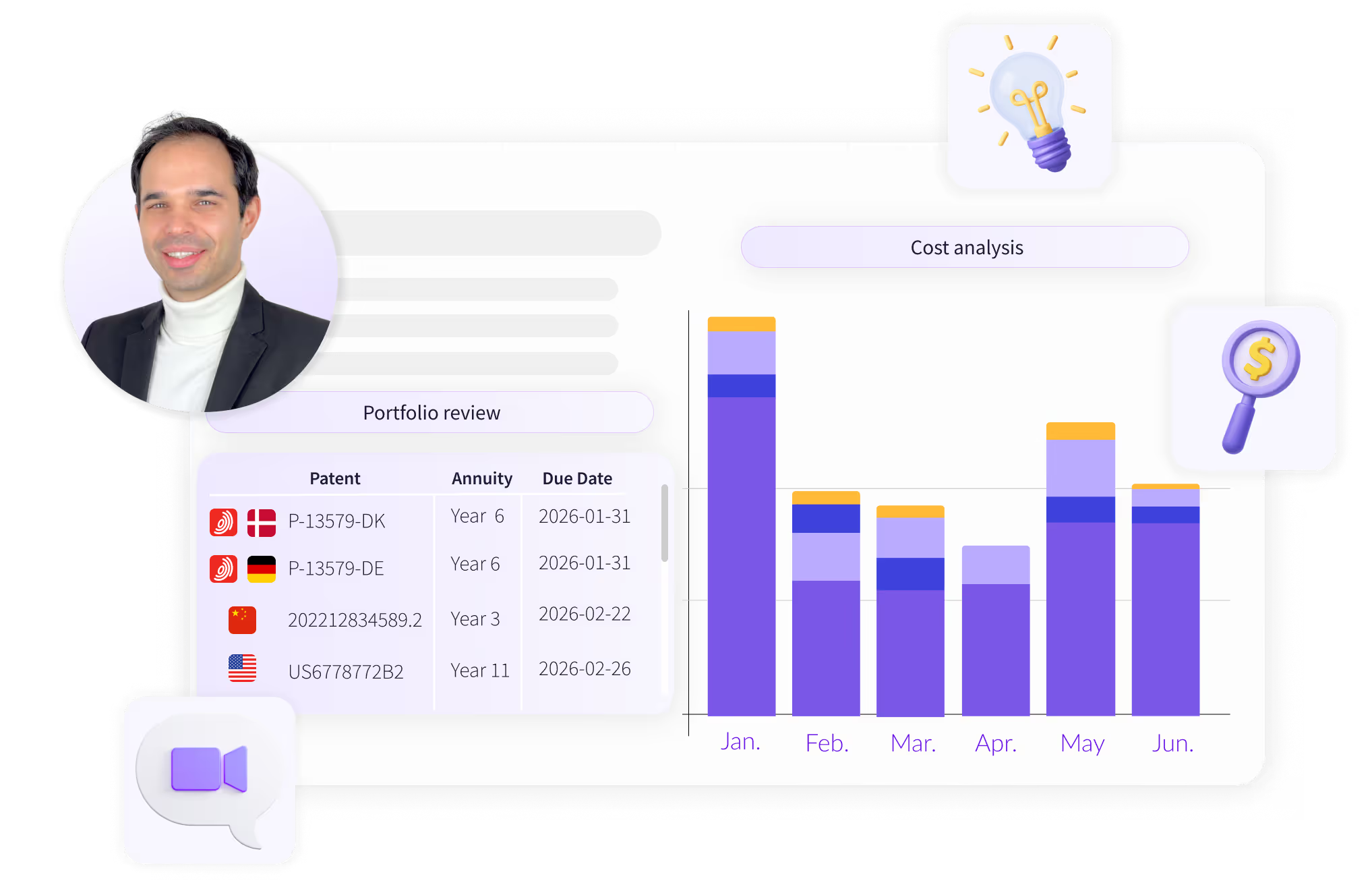
For patent renewals and trademark renewals, the strongest setup is one where deadlines, instructions, payments, invoices, and official confirmations are connected in one workflow. If you want to get a real-time review of your current IP renewal setup sign up for our interactive demo tailored to your specific IP needs.
Many IP teams discover operational inefficiencies only after reviewing their renewal workflows jurisdiction by jurisdiction.
If you want a clearer view of renewal costs, payment structures, local agent usage, or process risks across your portfolio, we’re happy to review your current setup and benchmark it against industry practices. Sign up for a free IP renewal cost audit for the personalized insights.
What is the difference between IP docketing and IP management?
IP docketing tracks deadlines and procedural actions. IP management is broader and includes portfolio strategy, budgeting, competitive analysis, commercialization, renewals, reporting, and decision-making.
Can I use a spreadsheet for IP docketing?
For 5 to 10 simple matters, possibly. For anything larger or more active, spreadsheets introduce real risk because they lack automated reminders, jurisdiction-specific rule sets, escalation workflows, and audit trails.
How often should a docket audit be conducted?
Semi-annually at minimum. Larger or higher-activity portfolios should consider quarterly audits.
What qualifications does a docketing specialist need?
Most experienced docketing specialists combine procedural knowledge with operational discipline. The role requires understanding how deadlines are calculated across jurisdictions, how office communications affect downstream actions, and how to identify inconsistencies before they become filing risks.
Is IP docketing only relevant for law firms?
No. Any organization that owns patents, trademarks, designs, or other IP assets needs a reliable docketing process. This includes corporate IP departments, research institutions, universities, startups, and individual IP owners.
What happens if you miss an IP deadline with a grace period?
A grace period is a limited window after the official deadline during which the action can still be completed, usually with a surcharge. Once the grace period closes, the right may be lost. Not all deadlines have grace periods, so relying on them is not a safe strategy.
If you're trying to figure out whether a specific patent is still inside its grace period, use our free Patent Grace Period & Surcharge tool to see if you are still in the grace period, or if not exactly how much the surcharge fee is in your jurisdiction.
What is the most common cause of missed IP deadlines?
Common causes include manual data entry errors, delayed processing of incoming correspondence, unclear ownership, missed instructions, and failure to recalculate downstream deadlines.
How long should docketing records be retained?
Records should be retained until the matter is fully closed, plus enough time to cover relevant professional liability or audit requirements. Many firms keep records for at least 10 years after closure.
What is the deadline to validate a European patent after grant?
For traditional national validation, the deadline is typically three months from the publication of the mention of grant. For Unitary Patent registration, the deadline is one month from the publication of the mention of grant.
Interested in a free IP renewal consultation? Benchmark your current IP renewal setup and costs against market standards.

.png)