
How to do a patent portfolio audit

.png)
- A patent portfolio audit checks ownership, status, business relevance, geographic coverage, future costs, renewal deadlines, and responsibilities.
- Start with a clear scope, then verify the data before reviewing the value of each patent.
- Build a renewal-fee forecast by jurisdiction and annuity year, not just by patent count.
- A small or mid-sized portfolio may take around two to four weeks to review.
- Most companies should run a full audit annually, with targeted reviews when something important changes.
- Renewal deadlines still need continuous monitoring between audits.
- Finish with clear decisions, named owners, and deadlines for every action.
A patent portfolio audit is a practical review of the patents and pending applications held by a business. It helps you confirm what you own, which patents still matter, what they will cost to keep, and what needs to happen next.
That last point matters. A portfolio may look complete in a spreadsheet while hiding outdated ownership records, patents linked to discontinued products, rising renewal fees, or deadlines that nobody is clearly responsible for.
This guide explains how to run a patent portfolio audit, what to review, who should be involved, how often to repeat the process, and how renewal deadlines and future costs fit into the picture.
Why run a patent portfolio audit?
A patent portfolio does not stay still just because no new applications are being filed. Products are retired, new markets become more important, companies buy or sell business units, team members leave, and patent renewal fees increase as patents age.
Over time, the portfolio can stop reflecting the business it was built to support. A regular audit helps you spot that early and decide where something needs to change. Here are the main reasons companies review their patent portfolios:
- Stop paying without a clear reason
Every patent does not need to support a product that is on sale today. Some patents protect future plans, strengthen a licensing position, block competitors, or support research that has not reached the market yet. But there should still be a reason for keeping each one.
Without a review, companies can continue paying renewal fees simply because nobody has challenged the previous instruction.
- Find gaps before they become urgent
Ownership records can become unclear after an acquisition, restructuring, assignment, or change of legal entity. Internal systems, outside counsel records, and patent registers may not always match.
A patent portfolio audit gives the business time to investigate these issues before they hold up a licence, transaction, enforcement decision, or renewal payment.
- Prepare for due diligence
Investors, buyers, licensees, and commercial partners may ask which patents the company owns, whether they are still active, where they are protected, and what they will cost to maintain.
It is much easier to answer those questions when the portfolio has already been reviewed, rather than trying to fix missing records during a live transaction.
- Make better renewal decisions
IP renewal decisions become harder as patents age and fees increase. An audit gives legal, product, and finance teams the information they need before the next invoice arrives. It also separates the decision from the payment process. The patent portfolio audit decides whether a patent should be kept. The renewal process makes sure that decision is completed on time.
What does a patent portfolio audit cover?
The exact scope depends on the business and the reason for the review. Most patent portfolio audits cover the following areas:
| Audit area | What to review |
|---|---|
| Portfolio records | Patent and application numbers, families, jurisdictions, owners, assignments, legal status, and remaining term. |
| Business relevance | Products, technologies, markets, licences, defensive roles, and future plans connected to each patent. |
| Geographic coverage | Whether the active countries still match current and planned markets. |
| Future costs | Official fees, service fees, local-agent costs, fee increases, and forecasted renewal spend. |
| Renewal position | Due dates, payment deadlines, instructions, responsible parties, and evidence of completed payments. |
| Next actions | Maintain, review later, licence, sell, allow to lapse, or refer for further advice. |
A routine audit does not always need to become a full legal review. Questions about validity, enforceability, ownership disputes, infringement, or transferability should be handled by qualified patent counsel.
How to run a patent portfolio audit
You do not need to turn the patent portfolio audit into a long, complicated project. A clear process is more important than a large committee or a perfect spreadsheet.
For a small or mid-sized patent portfolio, the review may take around two to four weeks. A focused audit of one product, market, or patent group may take only a few days. Large international portfolios with fragmented records will usually take longer.
A simple process looks like this:
Kick-off → Data collection → Portfolio review → Decision meeting → Sign-off → Follow-up
1. Decide what the patent portfolio audit needs to answer
Start by agreeing on the purpose. Are you reviewing the full portfolio, or only the patents connected to a product launch, acquisition, new market, licence, or upcoming cost increase?
At the start, confirm:
- which patents and applications are included;
- what decisions the audit needs to support;
- who will provide the data;
- who can approve the final decisions;
- when the review should be complete.
A clear scope keeps the audit focused. Without one, it can easily turn into a general cleanup exercise with no real outcome. For an SME, the audit may involve fewer people, a shorter timeline, and one person covering several roles. An enterprise may need to divide the review by business unit, product group, jurisdiction, or patent family, with separate owners and approval steps. The basic questions remain the same.
2. Gather and compare the records
Bring together the information held by internal teams, patent counsel, renewal providers, finance, and relevant patent registers. For each patent and pending application, collect:
- the patent or application number;
- the patent family;
- the jurisdiction;
- the owner;
- the legal status;
- the remaining term;
- assignment details;
- previous renewal payments;
- upcoming renewal deadlines and fees.
When two sources show different information, flag the difference. Do not quietly choose one version and move on.
Data collection often takes longer than the review itself, especially after an acquisition, provider change, or internal reorganization.
3. Connect each patent to the business
Once the records are reliable, look at why each patent is still being maintained.
Ask:
- Which product or technology does it support?
- Is that product still active?
- Does the patent protect a current or planned market?
- Is it relevant to a licence or transaction?
- Does it serve a defensive purpose?
- Is it linked to research or a future product?
A patent with no current product link may still be valuable. The point is not to remove anything that does not generate revenue today. The point is to make the reason visible.
This review should also compare the active jurisdictions with the company’s actual markets. You may find patents in countries that no longer matter, or important markets where the portfolio has little relevant coverage.
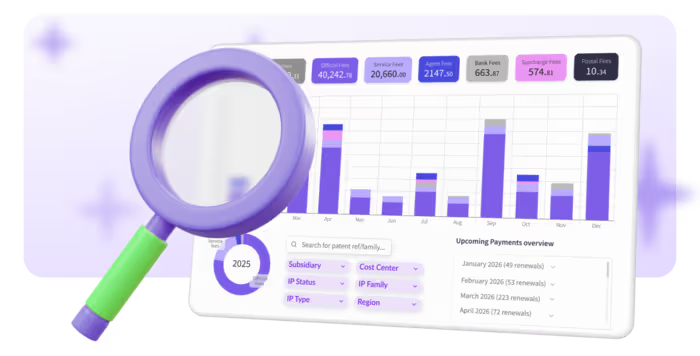
4. Forecast future patent renewal costs
Do not judge future spend by looking only at the number of patents in the portfolio.
Renewal fees depend on the jurisdiction and the age of the patent. Two portfolios with the same number of rights can have very different cost profiles.
PatentRenewal.com’s 2025 Patent Lifecycle Report found that the global average official renewal fee was approximately $517 per year. Individual fees ranged from below $10 to around $2,851.
Patent age matters too. Around 98% of patents in the report remained active through year six, before the sharpest pruning began between years eight and eleven. In the United States, official maintenance fees increased by approximately 87.9% between the first and second payments, around year seven.
A useful patent forecast should show:
- the jurisdiction of each patent;
- its current annuity or maintenance year;
- the next official fee;
- service and local-agent costs;
- major fee increases over the next three to five years;
- annual and monthly portfolio spend;
- costs by patent family, product group, or business unit.
This helps the company review patents before they reach a more expensive stage, rather than making a rushed decision when the invoice is already due.
A simple example
Imagine a company with 80 active patents across 12 jurisdictions. The total patent count looks stable. The cost forecast does not. Twenty-five patents are moving into years seven to ten. Several US patents are approaching the second maintenance payment. One older family is active across a number of higher-cost jurisdictions, even though the product it supports now generates limited revenue.
That does not automatically mean those patents should be dropped. It means they deserve a closer review before the next round of fees.
5. Check deadlines and payment responsibility
A patent portfolio audit may happen once a year. Patent renewal deadlines do not.
For every patent or application with an annuity obligation, confirm:
- the official renewal due date;
- the last date for payment without surcharge;
- any available grace-period deadline;
- the expected official fee and possible surcharge;
- whether the instruction is to renew, hold, or allow the right to lapse;
- who is responsible for payment;
- how the payment will be made;
- whether there is evidence of the previous payment.
This is where a good portfolio decision can still fail.
Legal may believe finance is handling the payment. Finance may be waiting for an invoice from outside counsel. A former provider may still appear as the responsible party in an internal record.
The Patent Lifecycle Report found that 4.8% of renewal payments were made late. The average surcharge was $225, and avoidable surcharges exceeded $715,000 across the dataset.
The patent portfolio audit should catch unclear responsibilities. Ongoing patent annuity management should then keep tracking the deadlines between reviews.
6. Make the decisions and assign the work
Once the records, business context, geographic coverage, costs, and renewal position are clear, hold a focused decision meeting.
You do not need to discuss every patent in detail. Spend the time on patents with:
- unclear ownership or status;
- high commercial importance;
- rising renewal costs;
- active or proposed licences;
- approaching deadlines;
- no documented reason for maintenance.
For each patent, agree whether it should be:
- maintained;
- reviewed again on a set date;
- considered for licensing or sale;
- allowed to lapse;
- referred for further legal or commercial advice.
Then assign the follow-up. The person approving the decision may not be the person responsible for the renewal payment. Both roles should be clear.
Finish with a written sign-off that records the decision, the owner, the action deadline, and any open question. Renewal or lapse instructions should be passed on immediately. Silence should never count as an instruction not to renew.
Who should be involved in a patent portfolio audit?
The right group depends on the size of the business and the purpose of the audit.
Smaller companies
A smaller company may involve:
- a founder, general counsel, or senior business owner;
- a product or technical lead;
- finance;
- outside patent counsel;
- the person or provider handling renewals.
One person may cover several of these roles. What matters is that the review includes the legal, commercial, financial, and renewal information needed to make a sound decision.
Larger companies
A larger business may need input from:
- in-house patent counsel;
- patent administrators;
- product and engineering teams;
- business-unit leaders;
- licensing or transaction teams;
- finance and procurement;
- outside counsel;
- the patent renewal provider.
Not everyone needs to join every meeting. Most contributors can review the relevant records in advance. The decision meeting should focus on the patents that actually need discussion.
How often should you conduct a patent portfolio audit?
For most companies, an annual audit is the right baseline.
| Audit frequency | Best suited to |
|---|---|
| Twice-yearly | Fast-moving, patent-heavy companies, including software and biotech businesses. |
| Annual | The recommended baseline for most established patent portfolios. |
| Biennial | Smaller portfolios connected to stable products, markets, and ownership structures. |
| Every 3 to 5 years | Mature portfolios with very few changes and no active business or legal triggers. |
The table is a guide, not a rule. Use a shorter cycle when the company files or acquires patents regularly, enters new markets, launches products often, expects fundraising or M&A activity, changes advisers or renewal providers, or has many patents entering more expensive annuity years.
A smaller portfolio may still need frequent reviews if the business moves quickly. A larger portfolio may use an annual full audit and more frequent targeted reviews for high-risk or high-value patent groups.
What should trigger an off-cycle patent portfolio audit?
You do not need to reopen the full portfolio every time something changes.
A full audit may make sense:
- before M&A;
- after a major restructuring;
- during a renewal-provider transition;
- when the portfolio has not been reviewed for several years.
A targeted review may be enough for:
- a new product launch;
- entry into a new country;
- a proposed licence;
- a recently acquired patent family;
- a legal or fee change in one jurisdiction;
- patents approaching a major renewal-fee increase.
The scope should match the event. Review the patents, records, costs, and responsibilities that may actually be affected.
Where PatentRenewal.com’s IP renewal cost audit helps
A patent portfolio audit helps a company decide which patents it wants to maintain. PatentRenewal.com’s free IP Renewal Cost Audit looks at what it currently costs to keep those patents active.
Patent holders and legal teams can provide a recent renewal invoice, portfolio information, or available cost data. We then review:
- official and non-official renewal fees;
- service and local-agent costs;
- upcoming annuity spend;
- costs across jurisdictions;
- available market benchmarks;
- areas where fees may lack transparency;
- possible savings or process improvements.
The company receives a clear breakdown of the current renewal setup and the costs behind it.
The IP Renewal Cost Audit does not replace a legal or commercial patent portfolio audit. It does not assess validity, ownership, infringement, patentability, or which patents the company should keep.
It is useful once those decisions are clear and the company wants to understand whether its renewal setup still makes sense. Request a free IP Renewal Cost Audit
Frequently asked questions
How long does a patent portfolio audit take?
A focused audit of one product, market, or patent group may take a few days. A small or mid-sized portfolio often takes around two to four weeks. A large international portfolio with incomplete records, multiple owners, or unresolved legal questions may take longer.
How much does a patent portfolio audit cost?
There is no standard price. An internal review may mainly require staff time, while a legal or transaction-related audit may require support from patent attorneys and other advisers.
The cost depends on the number of patents, jurisdictions, record quality, legal questions, and depth of the review.
PatentRenewal.com’s IP Renewal Cost Audit is free, but it only covers renewal costs and the payment setup. It does not replace a legal or commercial audit.
What is the difference between an IP audit and IP due diligence?
An IP audit is usually a broader review of the rights a business owns, uses, and maintains. It helps identify record gaps, business relevance, future costs, and required actions.
IP due diligence is normally linked to a specific transaction, such as an investment, acquisition, sale, or licence. It focuses more closely on ownership, legal risks, agreements, transferability, and whether the relevant rights can be relied on during the transaction.
Do I need a patent attorney to run a patent portfolio audit?
Not for every part. An internal team can collect the records, connect patents to products and markets, review costs, and identify upcoming decisions. A patent attorney or another qualified adviser should be involved when the audit raises questions about ownership, status, validity, assignments, infringement, enforceability, disputes, or transaction risk.
For the renewal-cost part, PatentRenewal.com’s free IP Renewal Cost Audit can help legal and finance teams understand fees, future annuity spend, cost layers, and potential savings.
How often should you conduct a patent portfolio audit?
Most companies should conduct a full patent portfolio audit annually. Smaller portfolios in stable industries may use a biennial cycle, while fast-moving, patent-heavy companies may need twice-yearly reviews.
Major transactions, product launches, geographic expansion, licensing talks, provider changes, and team turnover can also trigger an earlier targeted review.
.png)